
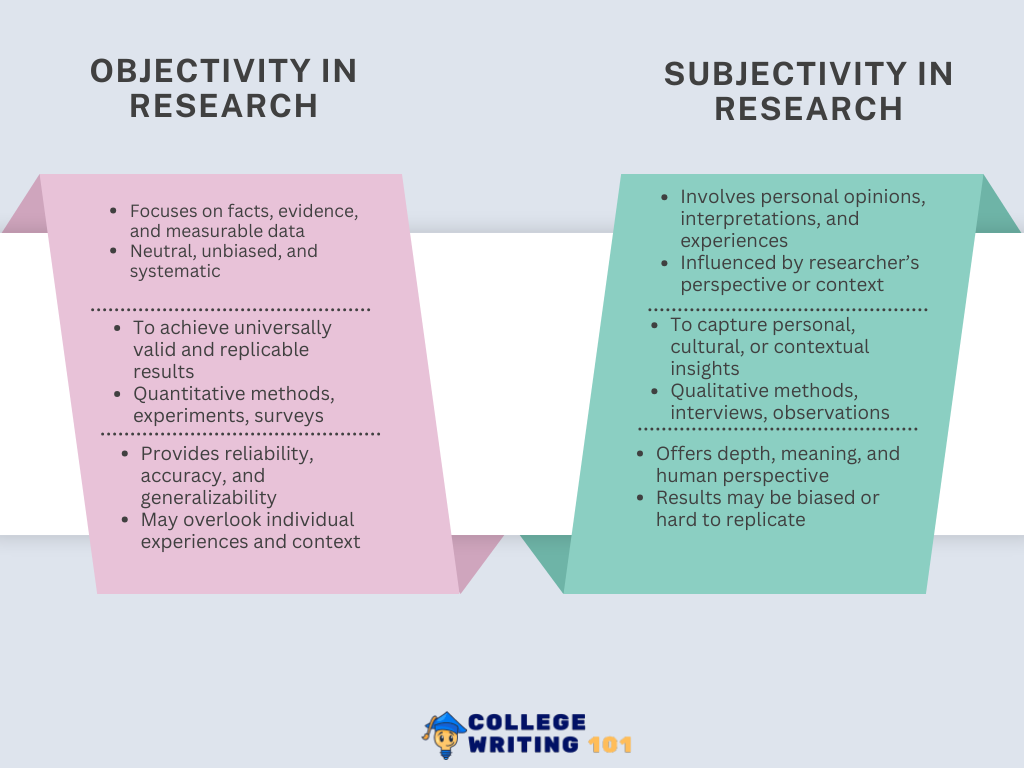
Objectivity is one of the fundamental pillars of credible research, yet it remains one of the most challenging ideals to achieve in practice. At its core, objectivity demands that researchers approach their work without personal bias, preconceived notions, or external influences that might skew results or interpretations. This principle requires scientists and scholars to separate their own beliefs, emotions, and expectations from their observations and analysis.
However, the pursuit of complete objectivity raises important questions about human nature and the research process itself. Can any researcher truly eliminate all personal perspectives? How do cultural background, professional training, and institutional pressures shape what we observe and how we interpret findings? These considerations have sparked ongoing debates about the realistic limits of objectivity and whether alternative approaches might better serve scientific inquiry.
Understanding both the importance and the limitations of objectivity helps researchers design more rigorous studies, acknowledge potential biases, and ultimately produce more reliable knowledge that advances their fields.
Importance of Objectivity in Research
Ensuring Valid and Reliable Results
Research objectivity directly impacts the validity and reliability of study outcomes. When researchers maintain an unbiased approach, they allow data to speak for itself rather than forcing predetermined conclusions. This neutrality ensures that findings accurately reflect reality rather than the researcher’s expectations or desires. Valid results form the foundation for building scientific knowledge and informing evidence-based decisions in fields ranging from medicine to public policy.
Objective research methods also enhance reproducibility, allowing other researchers to replicate studies and verify findings. This reproducibility strengthens the entire scientific enterprise by creating a system of checks and balances that filters out errors and false claims over time.
Building Scientific Credibility
The scientific community’s reputation depends heavily on maintaining objectivity standards. When researchers consistently demonstrate unbiased approaches to their work, they build trust not only within their professional circles but also with the general public. This trust becomes crucial when scientific findings influence major decisions about healthcare, environmental policy, technology development, and social programs.
Conversely, instances of research bias or misconduct can damage the credibility of entire fields. The public’s confidence in scientific recommendations relies on the perception that researchers prioritize truth over personal or political agendas.
Minimizing Personal and Cultural Bias
Human researchers inevitably bring their own perspectives, experiences, and cultural backgrounds to their work. Objectivity provides a framework for acknowledging and minimizing the impact of these inherent biases. By following systematic methodologies, using standardized measurements, and subjecting work to peer review, researchers can reduce the influence of personal prejudices on their findings.
Cultural bias poses particular challenges in research involving human subjects or social phenomena. Objective approaches help researchers recognize when their own cultural assumptions might be affecting their interpretations and encourage them to consider alternative explanations that may be equally valid.
Advancing Knowledge Across Disciplines
Objective research creates a common foundation that allows knowledge to accumulate across different studies, institutions, and even cultures. When researchers follow objective principles, their findings can be integrated into larger bodies of knowledge, enabling scientific progress and the development of comprehensive theories.
This cumulative aspect of objective research proves especially important in fields where no single study can definitively answer complex questions. Climate science, medical research, and psychological studies all benefit from the ability to combine objective findings from multiple sources to develop more complete understanding.
Protecting Research Integrity
Objectivity serves as a safeguard against various forms of research misconduct and questionable practices. It provides clear standards for evaluating whether research methods and conclusions are appropriate and honest. These standards help identify problems such as data manipulation, selective reporting of results, or inappropriate statistical analyses.
Professional codes of conduct in research emphasize objectivity as both an ethical requirement and a practical necessity for maintaining the integrity of scientific inquiry. Violations of objectivity principles often constitute serious breaches of research ethics.
Supporting Evidence-Based Decision Making
Society increasingly relies on research findings to guide important decisions about everything from medical treatments to educational policies. The objectivity of underlying research becomes crucial when these decisions affect public welfare, safety, and resource allocation. Objective research provides the reliable foundation needed for evidence-based approaches to complex social and technical challenges.
Decision-makers in government, business, and other organizations need confidence that research findings represent genuine insights rather than biased advocacy for particular positions or interests.
Factors that Threaten Objectivity
Personal and Cognitive Biases
Researchers are human beings with inherent psychological tendencies that can unconsciously influence their work. Confirmation bias represents one of the most pervasive threats, leading researchers to seek information that supports their existing beliefs while ignoring or dismissing contradictory evidence. This selective attention can occur at every stage of research, from hypothesis formation to data interpretation.
Anchoring bias causes researchers to rely too heavily on the first piece of information encountered, potentially skewing subsequent analysis. The availability heuristic makes recent or memorable events seem more probable or significant than they actually are, affecting how researchers assess risk or importance in their studies.
Cognitive dissonance can also compromise objectivity when researchers encounter findings that contradict their strongly held beliefs or theoretical commitments. Rather than accepting uncomfortable truths, researchers may unconsciously rationalize away conflicting evidence or modify their interpretations to preserve existing worldviews.
Financial and Commercial Pressures
Economic incentives pose significant threats to research objectivity, particularly in studies funded by organizations with vested interests in specific outcomes. Pharmaceutical companies funding drug trials, technology firms sponsoring research on their products, or fossil fuel companies supporting climate studies all create potential conflicts of interest that can consciously or unconsciously influence research design, execution, and reporting.
The pressure to secure continued funding can also compromise objectivity. Researchers may feel compelled to produce positive results or align their findings with funders’ expectations to maintain financial support. This dynamic is particularly problematic in environments where research funding is competitive and uncertain.
Patent considerations and intellectual property rights can further complicate objectivity when researchers have financial stakes in particular outcomes. The potential for commercial gain from specific findings may create unconscious pressure to interpret data in ways that support profitable applications.
Political and Ideological Influences
Political climates and ideological frameworks can significantly impact research objectivity, especially in fields that touch on controversial social, economic, or policy issues. Researchers working in areas such as climate change, gun violence, immigration, or healthcare policy may face pressure from political groups, advocacy organizations, or government agencies to produce findings that support particular positions.
Institutional political pressures can be particularly subtle but powerful. Universities, research institutes, and government agencies may have unofficial preferences for certain types of findings, creating environments where researchers feel pressure to conform to prevailing ideological positions within their institutions.
The polarized nature of contemporary political discourse can make it difficult for researchers to maintain neutrality on topics that have become politically charged. Even well-intentioned researchers may find their objectivity compromised by the intense social and professional pressure to align with particular ideological camps.
Cultural and Social Expectations
Cultural background and social identity can profoundly influence how researchers perceive and interpret phenomena, often in ways they may not consciously recognize. Cultural assumptions about gender, race, social class, or other demographic characteristics can shape research questions, methodologies, and interpretations of findings.
Social expectations within academic communities can create pressure to conform to prevailing theoretical paradigms or methodological approaches. Researchers may find themselves influenced by what is considered acceptable or prestigious within their fields, potentially compromising their willingness to pursue unconventional hypotheses or challenge established theories.
The desire for social acceptance and professional recognition can also threaten objectivity. Researchers may unconsciously modify their approaches or interpretations to align with what they perceive as the expectations of their peers, supervisors, or the broader academic community.
Career and Professional Pressures
Academic career structures can create powerful incentives that threaten research objectivity. The pressure to publish frequently and in high-impact journals may encourage researchers to pursue sensational findings or to present results in ways that maximize their publishability rather than their accuracy.
The “publish or perish” culture in many academic institutions can lead to questionable research practices, such as p-hacking (manipulating statistical analyses to achieve significant results), selective reporting of favorable outcomes, or splitting single studies into multiple publications to inflate publication counts.
Competition for tenure, promotions, and prestigious positions may influence researchers to align their work with what they perceive as career-advancing directions, potentially compromising their commitment to objective inquiry. The desire to establish a distinctive research identity or to become associated with particular theories may also bias researchers toward supporting their own previous work.
Methodological Limitations and Design Flaws
Poor research design can compromise objectivity even when researchers have the best intentions. Inadequate sample sizes, inappropriate control groups, flawed measurement instruments, or poorly designed experimental protocols can introduce systematic biases that skew results regardless of the researcher’s personal neutrality.
Selection bias in choosing study participants or research sites can significantly impact findings. When researchers consciously or unconsciously select subjects or locations that are more likely to produce desired outcomes, the resulting data cannot provide objective insights into the broader phenomena under investigation.
The choice of statistical methods and analytical approaches also presents opportunities for bias. Researchers may select analytical techniques that are more likely to produce statistically significant results or may interpret ambiguous statistical outcomes in ways that support their preferred conclusions.
Media and Public Pressure
The increasing visibility of research findings in popular media creates new pressures that can threaten objectivity. Researchers may feel compelled to oversimplify their findings or emphasize dramatic conclusions to attract media attention and public interest. The need to communicate complex findings in accessible terms can lead to distortions that prioritize impact over accuracy.
Social media and online platforms have amplified these pressures by creating new channels through which research findings are disseminated and discussed. Researchers may find themselves influenced by public reactions to their work, potentially affecting their future research directions or their interpretation of subsequent findings.
The 24-hour news cycle’s demand for immediate expert commentary can pressure researchers to offer opinions or interpretations before they have fully analyzed their data or considered alternative explanations. This rush to public engagement can compromise the careful, methodical approach that objectivity requires.
Technological and Data-Related Challenges
The increasing reliance on complex technologies and large datasets introduces new threats to objectivity. Algorithmic biases in data collection systems, machine learning models, or analytical software can systematically skew results in ways that researchers may not immediately recognize. These technological biases can perpetuate or amplify existing social biases present in training data or programming decisions.
Data availability and access issues can also compromise objectivity. When researchers can only access certain types of data or when data collection is limited by technological, financial, or political constraints, the resulting findings may not accurately represent the full scope of the phenomena under investigation.
The complexity of modern analytical techniques can create situations where researchers do not fully understand the assumptions or limitations of their chosen methods, potentially leading to inappropriate applications or misinterpretation of results.
Strategies to Maintain Objectivity
Implementing Robust Research Design
Sound methodology forms the foundation of objective research. Researchers should employ randomized controlled trials whenever feasible, as randomization helps eliminate selection bias and ensures that comparison groups are truly equivalent. Double-blind or triple-blind study designs prevent both researchers and participants from knowing which interventions are being applied, reducing the potential for unconscious bias to influence observations or measurements.
Pre-registration of research protocols and analysis plans before data collection begins creates accountability and prevents researchers from modifying their approaches based on preliminary results. This practice helps combat p-hacking and selective reporting by establishing clear commitments to specific analytical approaches and outcome measures.
Using validated measurement instruments and standardized protocols ensures consistency across different researchers, time points, and research sites. These standardized approaches reduce the influence of individual researcher preferences or interpretations on data collection and analysis.
Establishing Transparent Financial Practices
Clear disclosure of funding sources and potential conflicts of interest allows readers to evaluate research findings with full knowledge of possible financial influences. Researchers should report all sources of support, including direct funding, equipment donations, consulting relationships, and stock holdings that might relate to their research topics.
Implementing firewalls between funding sources and research execution can help maintain independence. This might involve having independent data safety monitoring boards oversee clinical trials, using third-party organizations to manage data collection, or establishing protocols that prevent funders from accessing raw data or influencing analytical decisions.
Diversifying funding sources reduces dependence on any single organization with particular interests in research outcomes. Seeking support from multiple agencies, foundations, or institutions can provide researchers with greater freedom to pursue objective inquiry without excessive concern about pleasing specific funders.
Promoting Peer Review and Collaboration
Rigorous peer review processes serve as crucial quality control mechanisms for identifying potential biases and methodological flaws. Journals and funding agencies should implement thorough review procedures that specifically evaluate studies for potential sources of bias and conflicts of interest.
Collaborative research involving multiple institutions and diverse research teams brings different perspectives to bear on research questions and reduces the likelihood that any single viewpoint will dominate the investigation. International collaborations can be particularly valuable for identifying cultural biases that might otherwise go unnoticed.
Replication studies play essential roles in verifying research findings and identifying results that may have been influenced by bias or methodological problems. The scientific community should place greater value on replication efforts and provide incentives for researchers to attempt to reproduce important findings.
Developing Bias Awareness and Training
Educational programs that teach researchers about cognitive biases and their effects on scientific inquiry can significantly improve awareness of potential threats to objectivity. These training programs should cover common biases such as confirmation bias, anchoring effects, and availability heuristics, along with practical strategies for recognizing and countering these tendencies.
Regular self-reflection exercises and bias assessment tools can help researchers identify their own potential sources of bias. Simple questionnaires or checklists that prompt researchers to consider their assumptions, expectations, and potential conflicts can serve as valuable reminders throughout the research process.
Mentorship programs that pair experienced researchers with newcomers can provide ongoing guidance on maintaining objectivity and recognizing potential bias issues. These relationships offer opportunities for more experienced researchers to share practical wisdom about navigating threats to neutral inquiry.
Creating Institutional Safeguards
Research institutions should establish clear policies that prioritize scientific integrity over other considerations such as publicity, funding, or political pressure. These policies should include specific procedures for handling situations where external pressures might compromise research objectivity.
Independent oversight committees, such as institutional review boards and data safety monitoring boards, provide external perspectives on research projects and can identify potential bias issues that research teams might miss. These committees should include members with diverse backgrounds and expertise relevant to the research areas they oversee.
Whistleblower protections encourage reporting of research misconduct or bias without fear of retaliation. Clear procedures for reporting concerns and investigating allegations help maintain research integrity by creating accountability for objective practices.
Utilizing Technology and Statistical Approaches
Blinded data analysis techniques, where analysts examine data without knowing which groups received which treatments, can help prevent unconscious bias from influencing statistical interpretations. Automated analytical pipelines can further reduce human influence on data processing and analysis.
Prespecified statistical analysis plans prevent researchers from choosing analytical methods based on which approaches produce the most favorable results. These plans should specify primary and secondary outcomes, analytical methods, and procedures for handling missing data or protocol violations.
Machine learning and artificial intelligence tools can help identify patterns in data that human researchers might miss due to their own biases or expectations. However, researchers must remain vigilant about biases that might be built into these technological tools themselves.
Managing External Pressures
Clear communication strategies help researchers explain their findings accurately without oversimplifying or sensationalizing results to attract media attention. Training in science communication can help researchers present their work in accessible ways while maintaining accuracy and appropriate uncertainty.
Establishing boundaries with media, political groups, and advocacy organizations helps researchers maintain independence from external pressures to support particular positions or conclusions. This might involve policies about when and how researchers engage with these groups and what types of statements they are willing to make.
Professional organizations should provide support and guidance for researchers facing political or social pressure to modify their findings or research approaches. These organizations can offer resources, advocacy, and professional protection for researchers committed to objective inquiry.
Fostering Cultural Change
Reward systems in academic institutions should recognize and incentivize high-quality, objective research rather than focusing primarily on publication quantity or media attention. Promotion and tenure criteria should explicitly value research integrity, methodological rigor, and contributions to objective knowledge.
Open science practices, including data sharing, open access publication, and transparent methodology reporting, create accountability and allow other researchers to evaluate and build upon previous work. These practices make it more difficult to hide biased approaches or selective reporting.
Creating research cultures that value intellectual humility and willingness to acknowledge uncertainty or negative results encourages researchers to report findings honestly rather than attempting to present overly confident or dramatic conclusions.
Continuous Monitoring and Improvement
Regular assessment of research practices within institutions and across fields can help identify emerging threats to objectivity and evaluate the effectiveness of existing safeguards. These assessments might include surveys of researcher experiences, analysis of publication patterns, or reviews of institutional policies.
Feedback mechanisms that allow researchers to report concerns about bias or pressure can help institutions identify and address problems before they compromise research integrity. Anonymous reporting systems may be particularly valuable for encouraging honest feedback.
Staying current with research on bias and research integrity helps researchers and institutions adapt their approaches as new threats emerge or as understanding of existing challenges improves. Professional development programs should regularly update their content to reflect current knowledge about maintaining objectivity.
Case Studies / Examples
The Diederik Stapel Fraud Case
One of the most shocking cases of scientific misconduct in recent decades involved Diederik Stapel, a prominent Dutch social psychologist who fabricated data across dozens of studies over nearly a decade. In 2011 Tilburg University suspended Stapel for fabricating and manipulating data for his research publications. This scientific misconduct took place over a number of years and affected dozens of his publications. By 2015, fifty-eight of Stapel’s publications had been retracted.
Stapel’s case is particularly troubling because of his prominence in the field and the sophisticated nature of his deception. Diederik Stapel, a former social psychology professor, conducted scientific fraud and fabricated his data at least 50 times. Many of his published works were with leading journals such as Science. The comprehensive investigation report revealed that Stapel completely fabricated datasets, creating results that supported his theoretical predictions about social behavior.
The case demonstrates how career pressures and the desire for dramatic findings can completely corrupt the research process. Stapel’s fraudulent studies often produced remarkably clean results that supported popular theories about stereotyping, discrimination, and social behavior. The Stanford analysis of the case notes that his research was frequently featured in news outlets, highlighting how sensational findings can gain widespread attention despite being completely fabricated.
The MMR Vaccine-Autism Study
The Andrew Wakefield case represents a devastating example of how bias and conflicts of interest can compromise research with serious public health consequences. In the infamous Andrew Wakefield study that incorrectly linked MMR vaccines to autism, both selection and reporting bias were rampant, leading to flawed conclusions and widespread misinformation.
This study, published in The Lancet in 1998, claimed to find a link between the measles-mumps-rubella vaccine and autism. However, subsequent investigations revealed that Wakefield clearly had a conflict of interest—a situation where a researcher would derive a financial or other personal benefit from a particular research finding, and therefore might favor such a finding (consciously or unconsciously) while conducting their research. The study was eventually retracted, but not before causing widespread vaccine hesitancy that continues to impact public health today.
The case illustrates how undisclosed financial conflicts can completely undermine research objectivity. Wakefield stood to profit financially from alternative vaccine products if the MMR vaccine was discredited, creating a powerful incentive to find evidence against the established vaccine, regardless of the actual safety data.
The OxyContin Marketing and Research Manipulation
The Purdue Pharma OxyContin case provides a clear example of how commercial interests can distort research and its interpretation. The company cited dubious studies, often funded by themselves, to provide a veneer of credibility to their claims. Purdue continued its aggressive marketing strategies even as evidence mounted that OxyContin was contributing to a rising tide of addiction and overdose deaths.
The company’s approach involved selective use and misinterpretation of research findings. Years later, Jick stated in an NPR podcast that he regretted writing that old one-paragraph piece with Porter in the New England Journal of Medicine. Jick commented on the unexpected result, admitting, “it was used by drug companies who created these…these new opioids and concluded that they were not addictive…but that’s not in any shape or form what we suggested…in our letter.”
This case demonstrates how legitimate research can be taken out of context and misrepresented to support commercial objectives. The STAT investigation revealed that Purdue’s tactics are reminiscent of the oil and gas industry, which has been accused of promoting misleading science that downplays its impact on climate change, and of Big Tobacco, which sought to undermine evidence that nicotine is addictive and secondhand smoke is dangerous.
Tobacco Industry Research Manipulation
The tobacco industry’s decades-long campaign to obscure the health risks of smoking represents one of the most systematic efforts to undermine research objectivity. Internal company documents revealed through litigation showed how tobacco companies funded research designed to cast doubt on established science, created fake research organizations, and selectively published studies that supported their commercial interests.
This case illustrates how well-funded industries can create an appearance of scientific controversy where none actually exists among legitimate researchers. The strategy involved funding studies with predetermined conclusions and suppressing research that contradicted industry positions.
The Theranos Blood Testing Fraud
The Theranos scandal, involving founder Elizabeth Holmes, demonstrates how corporate pressure and investor expectations can lead to the complete fabrication of research results. The company claimed to have developed revolutionary blood testing technology that could perform hundreds of tests from a single drop of blood, but investigations revealed that the technology never worked as claimed.
This case shows how the pressure to maintain funding and meet investor expectations can lead researchers and company leaders to present fraudulent data as legitimate scientific findings. The case resulted in criminal convictions and highlighted the need for independent verification of research claims, especially in commercial settings.
Publication Bias in Medical Research
Systematic analyses of medical research have revealed widespread publication bias, where studies with positive results are much more likely to be published than those with negative or null findings. The medical research transparency review highlights this as a fundamental threat to research objectivity.
This bias distorts the medical literature and can lead to overestimation of treatment effects, potentially harming patients who receive treatments based on incomplete evidence. The problem is particularly acute in industry-funded studies, where companies have strong incentives to suppress unfavorable results.
The Stanford Prison Experiment Reexamination
Recent reexaminations of the famous Stanford Prison Experiment have revealed serious methodological problems and potential researcher bias that compromised the study’s conclusions. Critics have identified problems with the study design, researcher intervention, and selective reporting that call into question the study’s famous findings about the power of social roles.
This case demonstrates how confirmation bias and researcher expectations can influence study outcomes, even in seemingly well-controlled experimental settings. It also shows how prestigious studies can go unchallenged for decades when their conclusions align with popular theories or social expectations.
Climate Research and Industry Interference
Documentation has revealed systematic efforts by fossil fuel companies to fund research designed to cast doubt on climate science, similar to the tobacco industry’s earlier tactics. These efforts involved funding research institutions, individual scientists, and advocacy organizations to produce studies that would support industry positions on climate policy.
The case illustrates how coordinated industry efforts can attempt to create false scientific controversies and undermine public understanding of well-established scientific findings. It demonstrates the importance of transparency in research funding and the need for independence from commercial interests in environmental research.
FAQs
What does being objective mean in research?
Being objective in research means approaching the study without personal bias, emotions, or preconceived opinions. It involves relying on evidence, facts, and standardized methods to ensure that findings are accurate, neutral, and trustworthy.
How to ensure objectivity in research?
Use clear and standardized research methods.
Collect and analyze data systematically.
Be transparent about methods and results.
Avoid letting personal beliefs or outside influences shape conclusions.
Use peer review and replication to check for accuracy.
What is the purpose of objectivity?
The purpose of objectivity is to ensure that research results are credible, reliable, and valid. By removing personal bias, researchers can produce findings that others can trust, replicate, and apply to real-world problems.